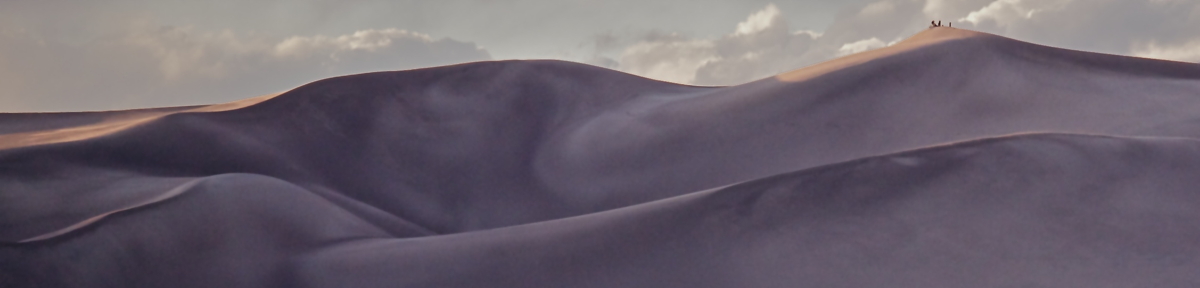
In our neck of the woods, we’ve had cloudy night skies recently (at least, since my E-M1II arrived). So I’ve lacked a clear view of stars to test the beast on, but fortunately there are plenty of Christmas lights to work with. Here’s a quick shot from one of the more-colorful nearby houses:
The Olympus E-M1II and long exposures
Some of you may recall that when the original Olympus E-M1 was released 3 years ago, quite a controversy was stirred up by its handling of long exposures. Basically, the noise level for the E-M1 was much higher than that for it’s much cheaper predecessor, the E-M5. At the time, I was able to compare an E-M1 and E-M5 side-by-side, and wrote up the results for public scrutiny.
So, now that the E-M1II is available (if only in limited quantities so far), I thought it’d be interesting to compare my copy of it to my E-M1 that helped make such a stir (while I still own it). I’ve also got an E-M5II on hand, so thought I should throw it into the mix as well.
Holiday greetings from Colorado
The Olympus E-M1 Mark II and back button focusing
Note to readers: I’m keeping this post alive for its useful comment threads, but the post’s content has really been superseded by material in a newer post.
I recently received an Olympus E-M1 Mark II — the idea being that it’ll shortly replace my trusty original E-M1 I purchased a few years back. While I’ve still got both, I’ll be shooting and posting some comparison shots between the two models — but first will be writing a few posts on upgrades and changes in the new model.
First up — setting up back button focusing.
What is back button focusing?
For those unfamiliar with the term, back button focusing refers to separating the focus and expose functions that normally occur sequentially when you depress the camera’s shutter button (focus on half-press, exposure on full-press). If you “move” the focus function off the shutter button, and assign it elsewhere, life is easier when photographing a fast-moving subject (like wildlife) — you can focus once, then concentrate on your timing / composition / exposure. Assuming, of course, that your subject doesn’t change its distance from you significantly as it flits about.
Lighthouse
A long exposure of the Eiffel Tower’s sweeping light beams at night:
It’s likely not obvious, but I took this shot using Olympus’ “Live Composite” function — I love how it lets me make images like this without having to use a neutral density filter, or (diffraction-blurring) small apertures. The full settings with an Olympus OM-D E-M5II and M.Zuiko 40-150mm lens were f/3.5, 60mm, ISO 200, exposures of 0.8 seconds each.
On guard
This little figure is part of the decoration on the Temple of the Warriors in the Maya ruins of Chichén Itzá, Mexico:
I’m not sure how tall he is, since he’s mounted at a significant height off the ground, and can’t be seen from up close — you need a reasonably long lens and some perspective correction software to get a shot like this. Still, if you look closely, you can see that the figure is emerging from the jaws of a feathered serpent, with most of the serpent’s details carved in bas-relief into the building’s stones.
Making the impossible possible
A road-side sign, seen along a highway just outside Cienfuegos, Cuba:
The caption translates to “Only socialism makes the impossible possible.” In case you don’t recognize the portrait, it’s of Hugo Chávez, the late president of Venezuela — a major benefactor of Cuba early in the 21st century.
Diamonds and Rubies
A look down Paris’ Champs Elysées at night:
This is just one frame out of many in a time lapse video I’m putting together — just as soon as a replacement for my now-defunct main computer arrives (!?!). If you were curious, there are little sheltered “islands” for pedestrians at the center of crosswalks on this street — perfect locations for a little night photography.
Temple V, Redux
Another view of the always-impressive Temple V in the ancient Maya ruins of Tikal, Guatemala:
This shot is from the northwest of the structure (unusual for a number of reasons, including its north-facing orientation). Temple V also has rounded corners, a feature unique to major structures in Tikal and its surroundings.
CDR
A quick slice-of-life shot; seen in Havana, Cuba; taken through a tour bus’ windows as we drove by:
This scene probably doesn’t look all that exceptional to you, but it’s got two interesting stories in it.